From 1662 until 2007 Denmark was divided into counties (amter). Borders and names changed several times, so the county you meet in a record depends on the year. The maps and lists below show the counties in each period, so you can see which county a parish belonged to when your ancestors lived there.
Many record series at the Danish National Archives are arranged by county, which makes the county a useful key when you search.
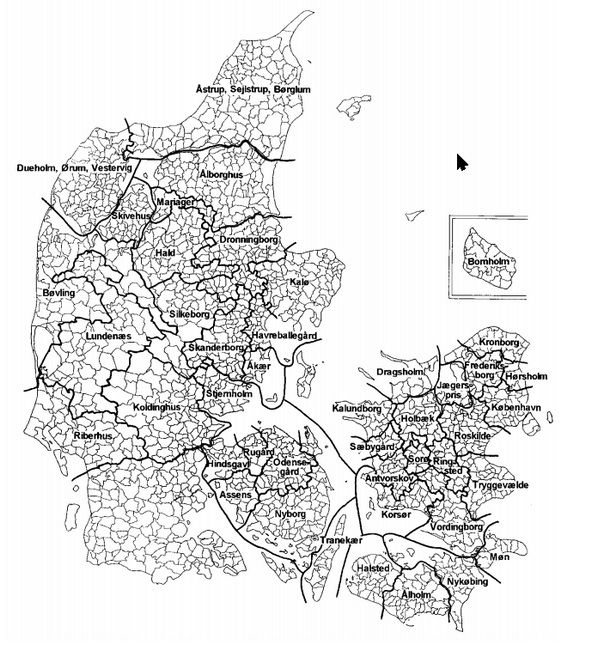
49 counties1662 – 1793
When absolute monarchy was introduced, the old fiefs (len) were replaced by counties in 1662, each run by a county governor (amtmand) appointed by the king. Most were named after the royal castle or manor they were run from. The last five on the list lay in the Duchy of Schleswig.
Åstrup, Sejlstrup, Børglum
Dueholm, Ørum, Vestervig
Aalborghus
Skivehus
Mariager Kloster
Hald
Dronningborg
Bøvling
Lundenæs
Silkeborg
Kalø
Skanderborg
Havreballegård
Åkær
Riberhus
Koldinghus
Stjernholm
Hindsgavl
Assens
Rugård
Odensegård
Nyborg
Tranekær
Halsted Kloster
Ålholm
Nykøbing
Møn
Vordingborg
Tryggevælde
Roskilde
Ringsted
Korsør
Antvorskov
Sorø
Sæbygård
Kalundborg
Holbæk
Dragsholm
Jægerspris
Kronborg
Frederiksborg
Hørsholm
København
Bornholm
Haderslev Øster established in 1789
Haderslev Vester established in 1789
Åbenrå og Løgum Kloster
Tønder
Sønderborg og Nordborg
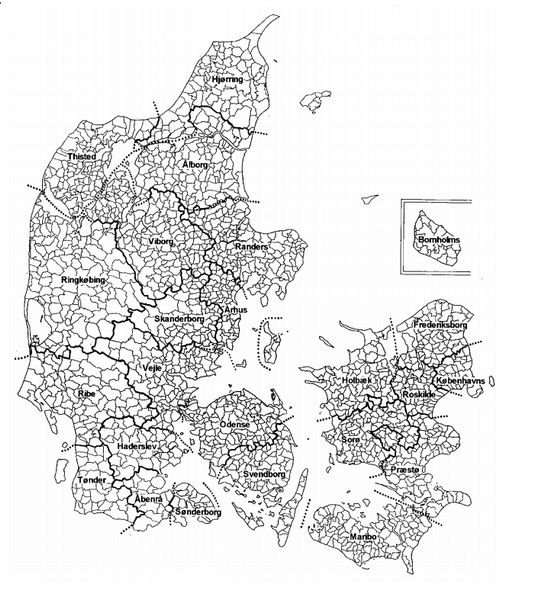
24 counties1793 – 1970
A reform in 1793 merged the many small counties into larger ones, now mostly named after their main town. Not all 24 existed at the same time: the years in grey show when a county existed. The four counties of Southern Jutland were added after the reunification in 1920.
Hjørring
Thisted
Ålborg
Viborg
Randers
Ringkøbing
Ribe
Århus
Skanderborg 1824–1867, 1942–1970
Vejle
Tønder 1920–1970
Haderslev 1920–1970
Åbenrå 1920–1970
Sønderborg 1920–1970
Odense
Svendborg
Holbæk
Frederiksborg
København
Roskilde 1793–1808
Sorø
Præstø 1803–1970
Maribo
Bornholm
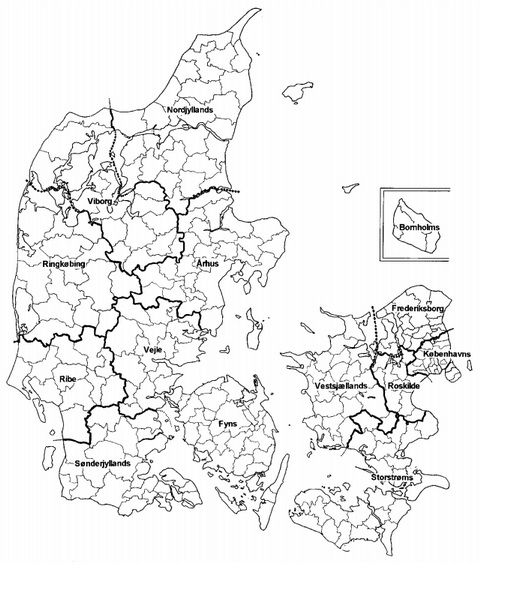
14 counties1970 – 2006
The municipal reform of 1970 reduced the number of counties to 14, and the many small parish municipalities (sognekommuner) were merged into larger municipalities.
København
Frederiksborg
Roskilde
Vestsjælland
Storstrøm
Fyn
Sønderjylland
Ribe
Vejle
Ringkjøbing
Viborg
Nordjylland
Århus
Bornholm
Outside the counties: Copenhagen Municipality and Frederiksberg Municipality belonged to no county and carried out the county tasks themselves.
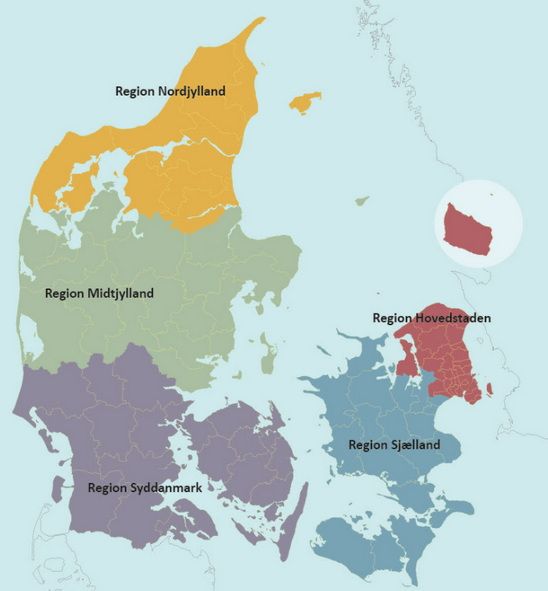
5 regionsSince 2007
On 1 January 2007 the counties were abolished and replaced by five regions, whose main task is running the hospitals. Most other county tasks went to the municipalities.